Cloudways vs. Traditional Hosting: Who Wins?
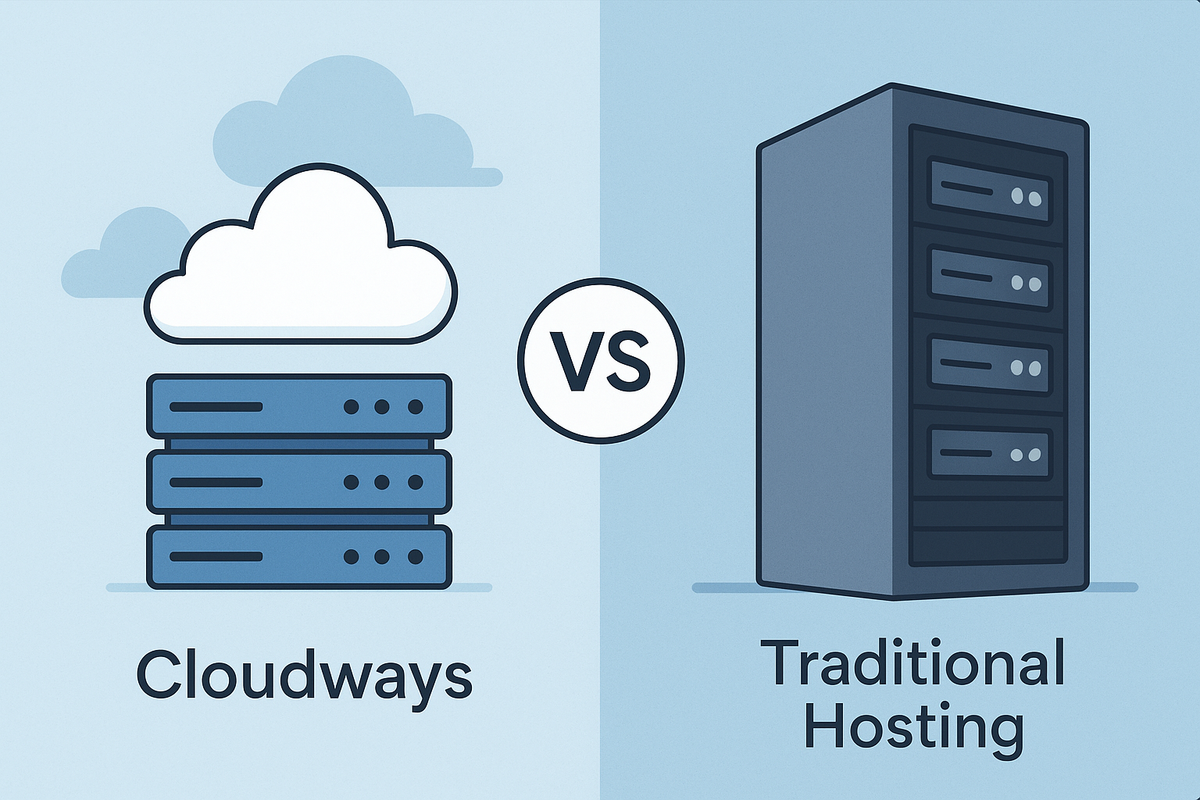
When you start looking for web hosting, you’ll quickly realize there are two very different worlds. On one side is traditional hosting — the kind of plans you’ve seen for years from companies like Bluehost, HostGator, or SiteGround. On the other side is a newer approach, often called cloud hosting, with providers like Cloudways leading the charge.
At first glance, they both promise the same thing: a place to put your website so people can visit it. But the way they go about it — and the kind of experience you’ll have as a site owner — couldn’t be more different.
So if you’re stuck between Cloudways and the traditional hosts, let’s slow things down and explore what each one really feels like.
The Familiar Comfort of Traditional Hosting
Traditional hosting has been around since the early days of the internet. You pick a plan (shared, VPS, or dedicated), your website gets placed on a server, and you log into a control panel to manage everything.
For many beginners, this feels familiar and safe. You’re paying a fixed monthly fee, you get a dashboard, and if something goes wrong, you can open a support ticket. It’s like renting an apartment from a landlord — you know the rules, and it’s a system that’s worked for millions of people for decades.
The upside of traditional hosting is simplicity. It’s usually cheaper to get started, the companies bundle extras like free domains and email, and you don’t need to understand much about servers. The downside is that you’re limited by the server you’re placed on. If your site grows too quickly, you may notice slowdowns or downtime, and upgrading often means moving to a completely new plan.
The Flexibility of Cloudways
Cloudways approaches hosting differently. Instead of giving you one fixed server, they let you tap into the infrastructure of the world’s biggest cloud providers — like DigitalOcean, AWS, or Google Cloud — but without requiring you to be a tech wizard.
Think of Cloudways as the friendly middleman. Normally, using a raw cloud server is complicated: you’d have to configure it, secure it, and manage it yourself. Cloudways takes care of all that complexity. You choose a provider, click a few buttons, and suddenly you’ve got a powerful cloud server running your website.
The benefit here is flexibility and performance. Need more resources? You can scale up with a couple of clicks. Expecting a surge in traffic? The cloud adjusts. And because you’re using high-end infrastructure, your site usually loads faster and more reliably than with old-school shared hosting.
The trade-off is that Cloudways doesn’t hold your hand in the same way traditional hosts do. They don’t sell domains, they don’t give you free email accounts, and their support is more technical. It’s more like managing your own home with a modern toolkit instead of renting an apartment where everything is bundled.
Which One Makes More Sense?
Here’s where the choice becomes personal.
If you’re a beginner who just wants to get a blog online or start a small business site, traditional hosting is probably enough. It’s straightforward, budget-friendly, and designed to make the process painless. Everything is under one roof, which is exactly what you need when you’re learning the ropes.
But if you’re more ambitious — maybe you want to run an e-commerce store, or you expect serious growth — then Cloudways starts to shine. The ability to scale resources instantly, tap into cloud infrastructure, and squeeze out faster performance is hard to ignore. It’s especially appealing to people who’ve outgrown shared hosting and don’t want to jump into expensive dedicated servers.
Putting It Simply
You could say it like this:
- Traditional hosting is like renting a room in a hotel. It’s easy, predictable, and you don’t have to think about much — but you can’t knock down walls or remodel the place.
- Cloudways is like building your own modern home on rented land. You have more control, more flexibility, and more power, but you’re also responsible for understanding how things fit together.
Neither is “better” in an absolute sense. It all depends on where you are in your online journey and how much control you want over your website.
Cloudways and traditional hosting represent two different eras of the internet. One is tried-and-true, built for simplicity and mass appeal. The other is modern and flexible, built for performance and scalability.
If you’re just dipping your toes into blogging or small websites, traditional hosting is the comfortable starting point. But if you’re serious about performance, growth, and modern infrastructure, Cloudways is hard to beat.
The good news? You don’t have to guess forever. You can start small on traditional hosting and move to Cloudways later, or you can dive straight into the cloud if you’re ready. Either way, the most important step is getting started — because no host in the world matters until your site is alive and kicking.